Introduction
“albert” — as the word echoed in the Nemeton office 5 years ago, little did anyone know the impact it would have on the company as a whole. At first it was a mere box ticking exercise, part of the paperwork, a word that people would shudder at when it was mentioned as people thought of it as a beast of extra work. Employees deemed it as an unnecessary addition to their workloads. There was a perception of “how is this going to change anything?” — however, in a short five years it has drastically changed people’s attitudes to the environment, both professionally and in their own homes, which is nothing but a good thing.
Where we were pre-albert?
5 years ago we did not take heed of how our productions were impacting the environment. Whether it was a lack of understanding or turning a blind eye, whichever the case, the company was not aware of the extent of the impact its productions had on the environment. Learning that the average television programme produces tens of tonnes of carbon dioxide — and that an OB is in the thousands — is something we would not have ever taken into consideration. Employees and management were not aware of Nemeton’s Carbon Footprint, which once drafted showed stark results. The environmental impact of entertainment and TV production is accelerating extinction. This version of the future was not something we were proud of, and we realised — with grave urgency — that we had to change our habits, both professionally as a company and in turn lead by example so that employees could also change their habits in their private lives in order to do better for the environment. You can only manage what you can measure, and we needed to manage our impact more carefully than ever before, as it was obvious we have only precious few years in which to do so.
Why Change?
Through the introduction of albert, Nemeton had to decide where they wanted to be in terms of the environment and how they wanted to set environmental standards for its fifty employees. As a company, Nemeton created an environment policy and wanted to become an environmentally conscious business. An environmentally conscious business, also known as a sustainable business, prioritises practices that minimise its negative impact on the planet. This means going beyond just following bog-standard regulations but proactively identifying ways to reduce your company’s negative impacts. In order to do this we had to have a collective approach — we had to encourage the whole team to get involved in implementing new processes and policies in order to improve the company’s environmental standing and essentially be better people as a whole. We were so lucky that all employees bought into this, and the success of all the company’s implementations is a reflection of this.
What we have implemented?
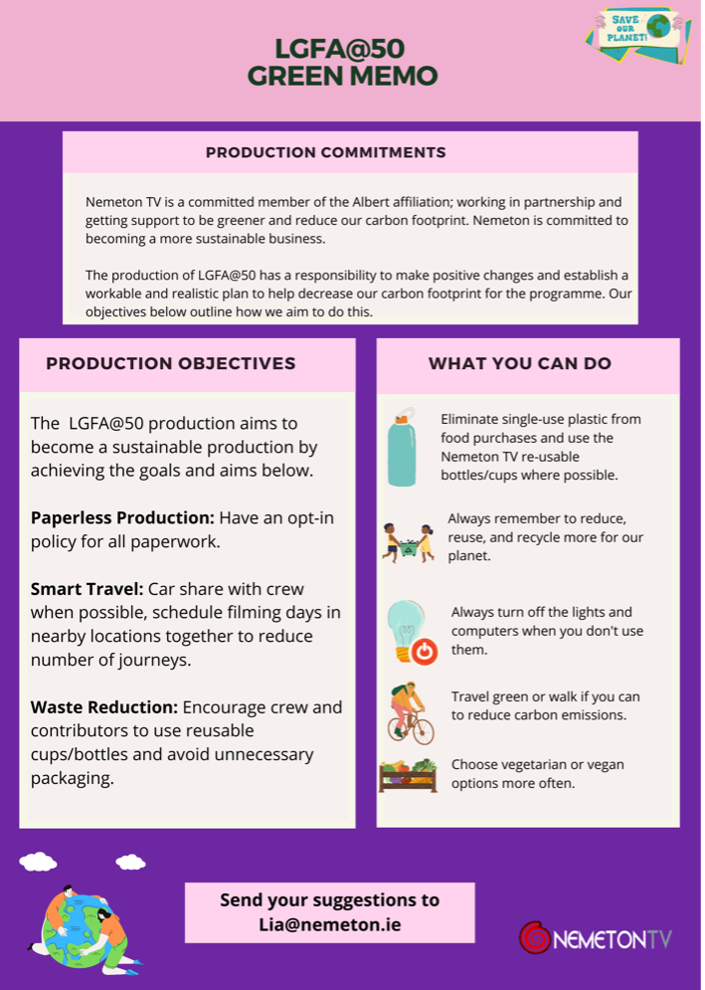
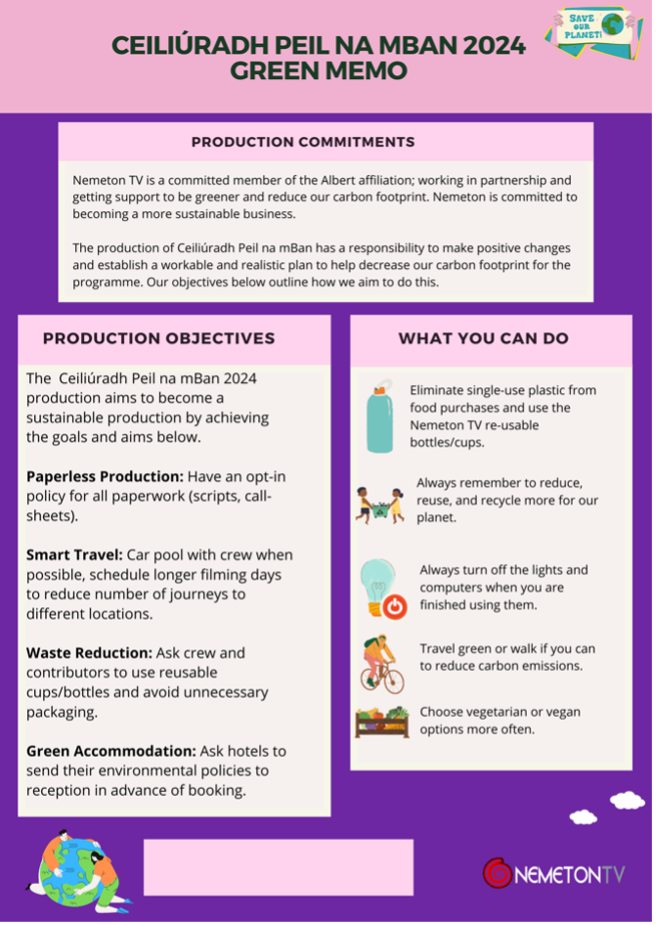
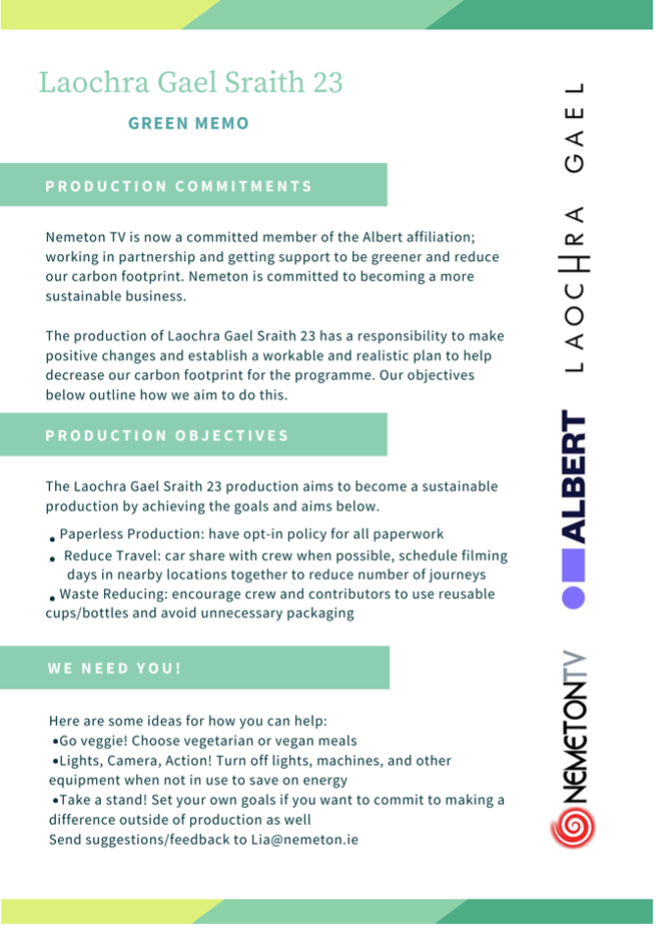
There have been many new initiatives implemented in Nemeton. Having to create Green Memos prior to productions, and also draft an individual Carbon Footprint attached to each production, opens your eyes to new ways of reducing the company’s impact.
Green Memo Examples
Company Wide Initiatives Implemented
Solar Farm
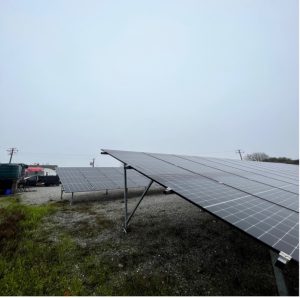
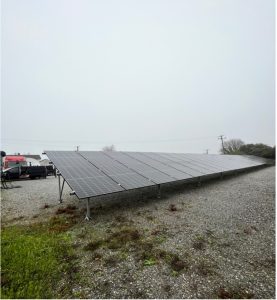
Solar farms represent a crucial step toward a sustainable future, providing numerous environmental, economic and energy benefits. Solar farms represent an innovative solution to harnessing renewable energy on a larger scale. As the world shifts towards sustainable practices, Nemeton took a major step in the right direction by implanting a solar farm onsite. There are many advantages of having our own solar farm.
Environmental Advantages — Solar farms play a significant role in reducing carbon emissions and reliance on fossil fuels. By generating clean, renewable energy, they help combat climate change and decrease air pollution. The transition to solar energy contributes to a healthier planet for future generations.
Energy Independence — Solar farms contribute to energy independence by decreasing reliance on imported fuels. Companies can harness their natural resources, making them less vulnerable to global energy price fluctuations.
Waste Management
The first step was reducing the amount of waste generated. There were a few ways we did this: reducing packaging, using eco-friendly materials, using energy-efficient products, investing in products with longer life cycles, and prioritising lean manufacturing to minimise waste. We created a waste audit in order to improve sustainability, enhance operational efficiency, and reduce costs. In the audit we identified waste streams and inefficient practices and then implemented targeted strategies to reduce waste production and support long-term environmental goals — such as introducing glass, compost and sharps bins on top of those already in existence, using energy-saving devices on all computers and edit suites, and implementing a zero-waste to landfill policy. We have banned the use of single-use plastics on all productions, and all employees have been provided with Nemeton branded water bottles and coffee cups. We also operate paperless productions and have an opt-in policy for any paperwork.
HVO Fuel
Nemeton implemented HVO Fuel to be used in all company vehicles. HVO stands for Hydrotreated Vegetable Oil. HVO biodiesel, also known as renewable biodiesel, is a biofuel made from hydrogen-treated oils and fats from vegetable and animal sources. It is a second generation biofuel, fossil-free and renewable, and one of the most sustainable types of diesel available today — especially as it is also suitable as a fuel for medium to heavy engines. There are many advantages to HVO:
- Fewer emissions — Both the production and combustion of HVO fuel often releases up to 90% less CO2 than regular diesel. In the process, fewer substances such as soot are also emitted.
- Fossil-free — HVO biodiesel is made from various renewable raw materials and some residual waste streams. No fossil raw materials are used, which makes HVO biofuel completely fossil-free and biodegradable. Please note, this refers only to HVO100 biodiesel — the number 100 indicates that it is 100% pure and not mixed with fossil diesel.
- Good performance — Whereas some types of biofuels cannot deliver the same energy, HVO biofuel often performs surprisingly well, virtually the same as conventional diesel. As a result, it can be used as a direct replacement for traditional diesel fuels, usually without making any modifications to the equipment or engine.
- Low maintenance & safe — Besides being sustainable, this type of diesel is also particularly low-maintenance and safer to use than fossil diesel. This is because it contains no FAME components that can lead to fouled filters and harmful substances in the tank. In addition, it does not solidify at low temperatures, making it excellent for use in winter too.
Carpooling – Weekly Travel Plan
We have implemented car-pooling where possible to allow for fewer vehicles on the road. A weekly travel plan is distributed to look at all possibilities of reducing travel. Along with this, Nemeton has taken the initiative to hire locally based crew when possible — again to reduce travel across the board.
Heating System (ATC Smart Sunray)
Nemeton previously had overnight storage heaters that were extremely old and drawing a huge amount of electricity, which was ultimately wasted heat. The new system implemented is controlled with pre-set temperatures, all on timers, and offices not in use are temporarily switched off. The ATC Sun Ray RF350 WiFi Radiator is a high-performance thermal electric radiator designed with advanced digital technology for efficient heating. It incorporates thermal emission oil for rapid heat-up and high-quality aluminium construction, ensuring durability and effective heat distribution. The RF350 model offers wireless control capabilities through a Gateway, allowing users to manage the radiator remotely via an app.
- Energy Efficiency — Utilises PID Intelligent Control to reduce energy consumption and save on costs.
- Energy Conservation — Incorporates Open Window Technology to conserve energy.
Reusable Water Bottles & Coffee Cups
We have banned the use of single-use plastics on all productions and all employees have been provided with Nemeton branded water bottles and coffee cups.
Suppliers – Accommodation & Food
As Nemeton began introducing new policies and ways to improve its environmental impact, we had to look at all suppliers that we deal with regularly and examine their own green policies and procedures. We now favour hotels, restaurants and others that have an environmental conscience and thoroughly enjoy working with likeminded companies. We have also introduced meat-free days on productions to encourage crew to reduce meat consumption.
Remote Working
Remote working has been introduced for employees living further afield, to again reduce travel and energy consumption. We encourage Zoom and Google Hangout meetings to replace in-person meetings wherever possible, to reduce travel.
Future? Where we want to be?
Our environmental goals are ever changing and always a work in progress. We are continuously learning from likeminded companies and individuals and are always seeking feedback pre, during and post production on ways we can improve.
We are continuously updating the environmental policy in the Company Handbook in line with the most recent guidance.
Ideally, we would like to get to a point where we can have the lowest carbon footprint on all our productions that we possibly can. We always seek to lead by example and are encouraged by the environmental habits our employees now take home from their workplace into their own communities.
Contact Us
If you want to find out more about Sustainable Media Ireland, are interested in becoming a Member, or are keen to collaborate, please get in touch by sending us an email.